

Silicone nose pads may be removed and adjusted inward or outward for airtightness. Pads may be removed and washed with soap. Allow them to dry before replacing them on the mask. Remove the filter assembly when washing the medical-grade plastic mask with soap and water, and allow it to dry before use. Do not use alcohol because it will degrade the plastic mask and silicone nose pads. Note: Silicone Nose pad use is optional. The foam nose bridge is also optional. First, try without using them.
Yes, using soft, clean, medical-grade silicone against your face is generally safe. It is hypoallergenic and non-reactive. It is latex-free to prevent allergic reactions.
SUPER MASK by Samgo1 LLC “Patent Pending. “Airtight comfort”. No nose pinch. (First of its kind)
Self-adhesive silicone pads can be easily repositioned to create a secure, airtight seal around
the nose. The pads are removable, washable, and designed for repeated use. By
eliminating the need for traditional nose pinching found in standard surgical and fabric
respirator masks, these silicone pads provide a more comfortable fit. They help reduce
pressure on the nose bridge, prevent discomfort, and minimize the risk of long-term skin
irritation or damage.
Key Features • Repositionable adhesive backing for optimal placement • Conforms to
nasal contours for improved airtight seal • Eliminates reliance on metal nose clips or
manual pinching • Reduces localized pressure on the nasal bridge • Washable and
reusable for extended product life. Material Composition • Medical-grade silicone (skin
contact safe) • Hypoallergenic, non-latex construction • Integrated pressure-sensitive
adhesive (PSA) layer
Note: Caution when removing the mask. Silicone pads are engineered to be repositioned
and may move or be removed from the mask. You may have to reposition or replace them for optimal airtightness.
Key Scientific and Third-Party Studies
- Nature Communications Study: Research published in Nature Communications demonstrated self-charging electrostatic face masks leveraging poly(vinylidene fluoride) nanofiber films and nylon fabric, verifying that breathing movements continuously replenish electrostatic charges via the triboelectric effect to maintain a 95.8% filtration efficiency over extended use.
- Oxford Academic / Oxford Materials: A study published via Oxford Academic evaluated graphene oxide-modified polypropylene respiratory layers, proving that simple mechanical agitation and the triboelectric effect successfully recharge mask filters and stabilize performance in humid conditions.
- PMC / National Institutes of Health (NIH): Evaluations hosted through the National Center for Biotechnology Information detail multiple investigations confirming that coupling triboelectric layers prevents the rapid electrostatic charge decay normally experienced by standard melt-blown electret filters during prolonged wear. Yes, studies evaluating self-charging respirator and face mask filters driven by the triboelectrification effect have been published and indexed in the National Institutes of Health (NIH) digital database (PMC).
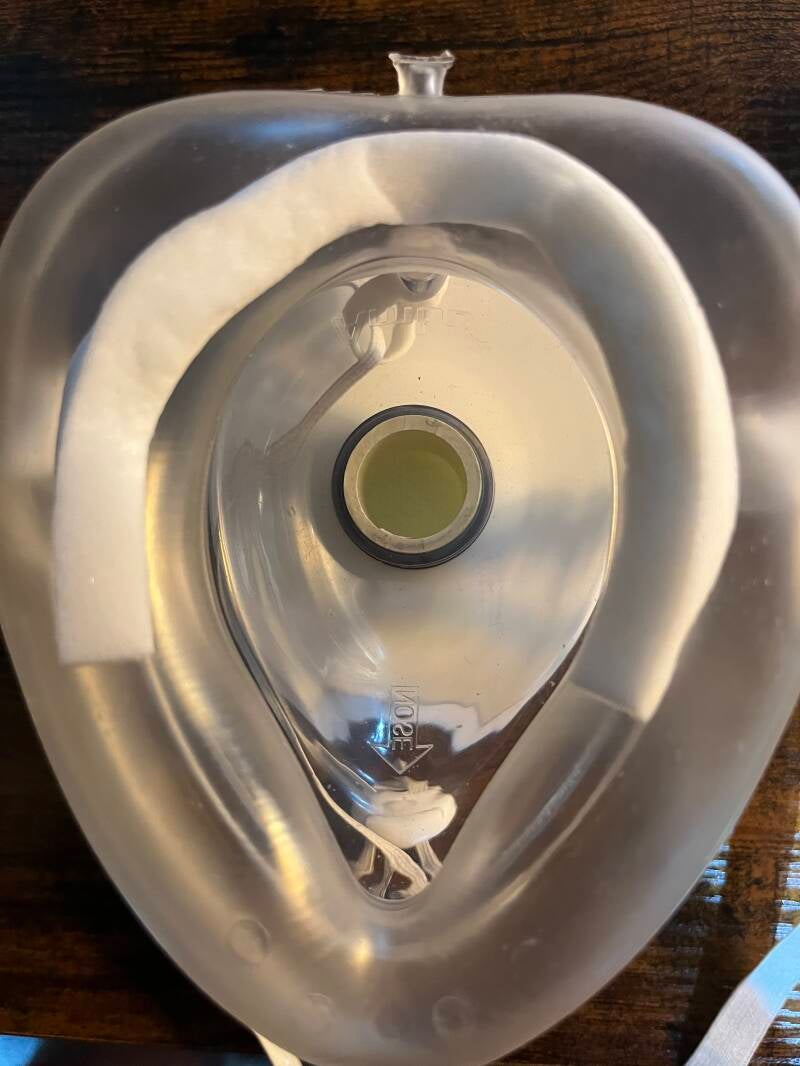

SUPER MASK — WARNINGS & LIMITATIONS • This respirator helps reduce exposure to certain airborne particles. It does NOT eliminate the risk of disease or infection. • Improper use may result in sickness or death. • DO NOT use in atmospheres containing less than 19.5% oxygen. This respirator does not supply oxygen. • DO NOT use for protection against gases, vapors, oil aerosols, asbestos, or sandblasting. • DO NOT alter, modify, or misuse this respirator. • Not for use by children. • Individuals with respiratory or cardiac conditions (e.g., asthma, COPD) should consult a physician before use. • Leave the contaminated area immediately and discard if the respirator is damaged, soiled, or breathing becomes difficult. Super Mask Instructions: Form the plastic mask outward and snap on the filter. Adjust the neck straps around your neck. If needed, remove and adjust the nose pads for airtightness. Place the fabric mask over the filter and plastic mask using the ear straps. For different face sizes and beards, use a second fabric mask around the neck area using ear straps or ear strap savers.
The primary NASA document detailing this specific research is titled "Charging Experiments and Filtration Testing on Facemask and Respirator Materials" (NASA/TP–20205011762).
Published by the NASA Glenn Research Center in late 2020 (and added to the NASA Technical Reports Server database), this technical publication targeted the mechanics of respirator materials.
Key Findings of the NASA Report
The research focused on how decontamination methods affect the electret (electrostatic) charge of N95 and surgical masks, as well as methods to recharge those fabrics.