

Evidence-based facts
T
Effectiveness of Non-Medical "Super" Masks
- High-Grade Filtration: The SAMGO1 "Super Mask" uses a "floating" N95 filter pad that oscillates with breathing, which can generate an electrostatic charge (triboelectrification) that increases the capture of fine particles (including viruses) and extends the filter's lifespan.
- Better Fit & Seal: These masks are often designed to create a more airtight seal than standard disposable masks, which helps ensure air passes through the filter rather than around the edges.
- Not for Medical Use: Despite using N95-grade materials, these masks are often marketed as "not for medical use" because they have not undergone the strict, official NIOSH certification process.
Comparison to Other Masks
- Vs. Cloth/Surgical: Non-medical "super" masks are generally more effective than cloth or standard surgical masks because they provide better filtration and a better seal against the face.
- Vs. NIOSH-Approved N95s: While they may offer comparable or superior filtration efficiency, they lack the official, rigorous certification of NIOSH-approved respirators.
Key Considerations
- Source Control: They are effective at reducing the spread of respiratory droplets from the wearer (source control).
- Personal Protection: They may offer good personal protection if they form a proper, tight seal on the user's face.
- Use Case: The CDC recommends that the general public wear the most protective, well-fitting mask available, and that for higher-risk situations, a highly protective respirator (like N95 or equivalent) is preferred.
In summary, a well-designed, non-medical "super mask" (like that from SAMGO1 LLC) is likely to provide better protection against COVID-19 than a cloth or surgical mask, potentially approaching the performance of an N95 if it fits tightly.
The SUPER MASK does not have an FDA 510k and has not been tested by NIOSH and is not intended for medical use. The SUPER MASK does not state protection against COVID-19. The SUPER MASK uses an N95 rating filter pad with an elastomeric medical-grade mask that can create an airtight seal. The N95 filter pad has an airtight seal.
Evidence-based facts
Yes, a reusable plastic mask that uses a genuine, properly sealed N95 filter pad offers a high level of protection against COVID-19, comparable to a disposable N95 respirator, provided the mask achieves a tight, airtight seal against your face. The key is the combination of the N95 filtration and the lack of air leakage around the edges.
How it Protects Against COVID-19
- High Filtration Efficiency: The "N95" rating signifies that the filter material has been tested by the National Institute for Occupational Safety and Health (NIOSH) to block at least 95% of airborne particles as small as 0.3 microns. COVID-19 virus particles travel on respiratory droplets and aerosols, which are effectively captured by the filter material through a combination of mechanical and electrostatic forces.
- Airtight Seal: A proper, airtight seal (often confirmed by a fit test) ensures that nearly all inhaled and exhaled air passes through the filter media, preventing infectious aerosols from leaking in or out through gaps around the sides of the mask. This tight fit is crucial for high-level protection and is a primary differentiator from loose-fitting surgical or cloth masks.
- Reusable Design: The durable plastic construction and replaceable filter pads of an elastomeric (reusable) respirator allow for repeat use after proper cleaning and disinfection, which can be a cost-effective and practical solution for long-term protection.
-
Can a face mask protect against COVID-19 and not state it?
Yes, a face mask can provide protection against COVID-19 even if the packaging does not explicitly state it.
Many masks sold to the general public carry disclaimers primarily for legal and regulatory reasons.Why Masks Protect Without a Label- Source Control: This remains true even if the box states the mask is "not for medical use" or does not mention COVID-19.
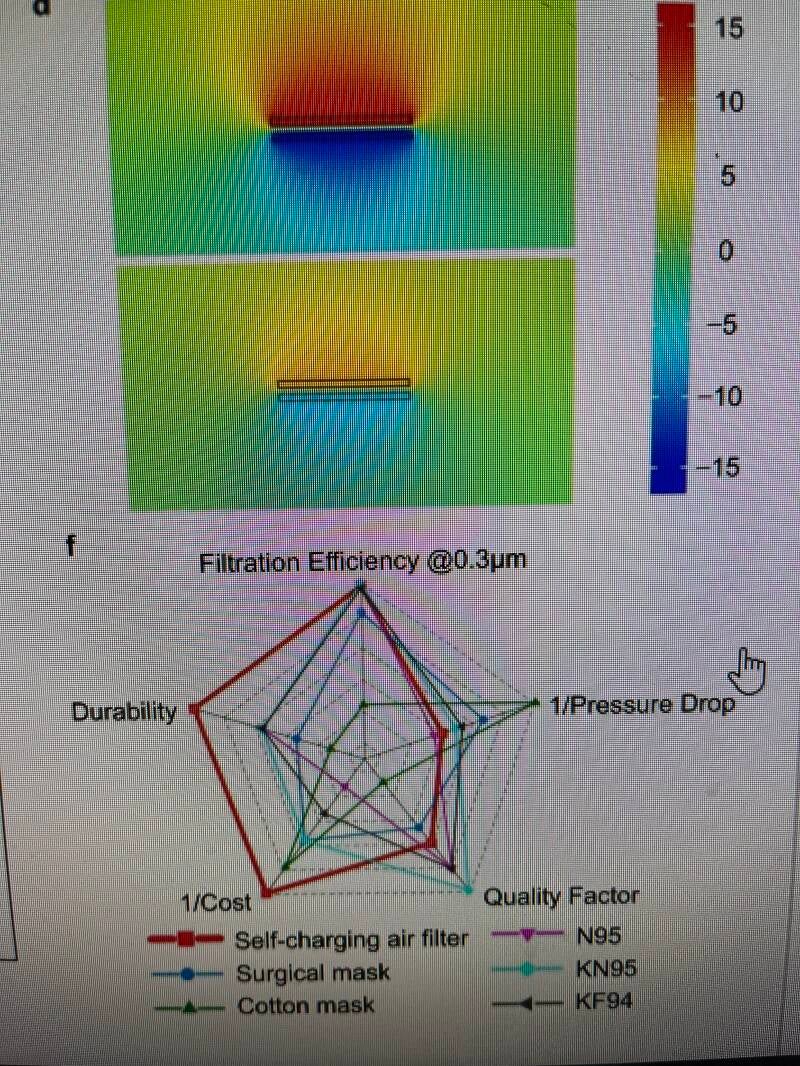
Electrostatic potential attenuation with and without self-charging function, implying a prolonged electrostatic absorption capacity with self-charging.
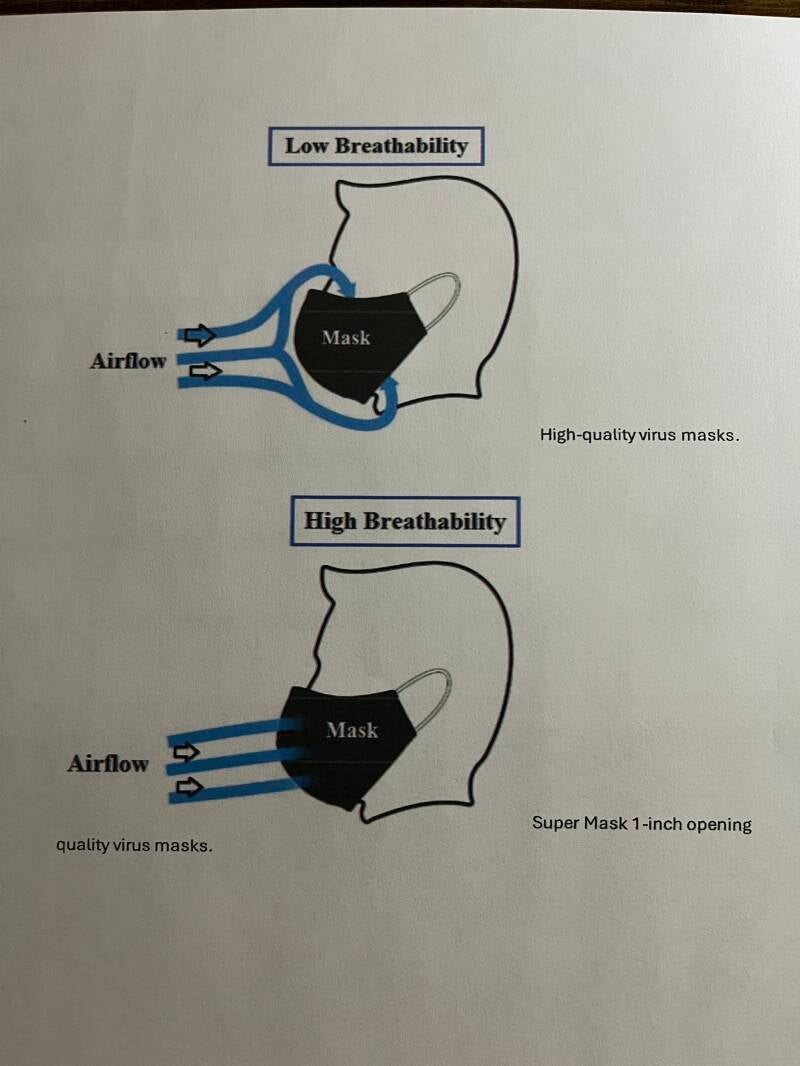
- Higher filtration masks have multiple layers of fabric. Hence, it can result in lower breathing. These masks are not healthy during walking and running when our bodies require higher oxygen levels. An example of a high filtration mask is an N95. A high-filtration mask creates very low pressure on the mouth side, and the air is drawn from the sides of the mask.