

Small Gap Created
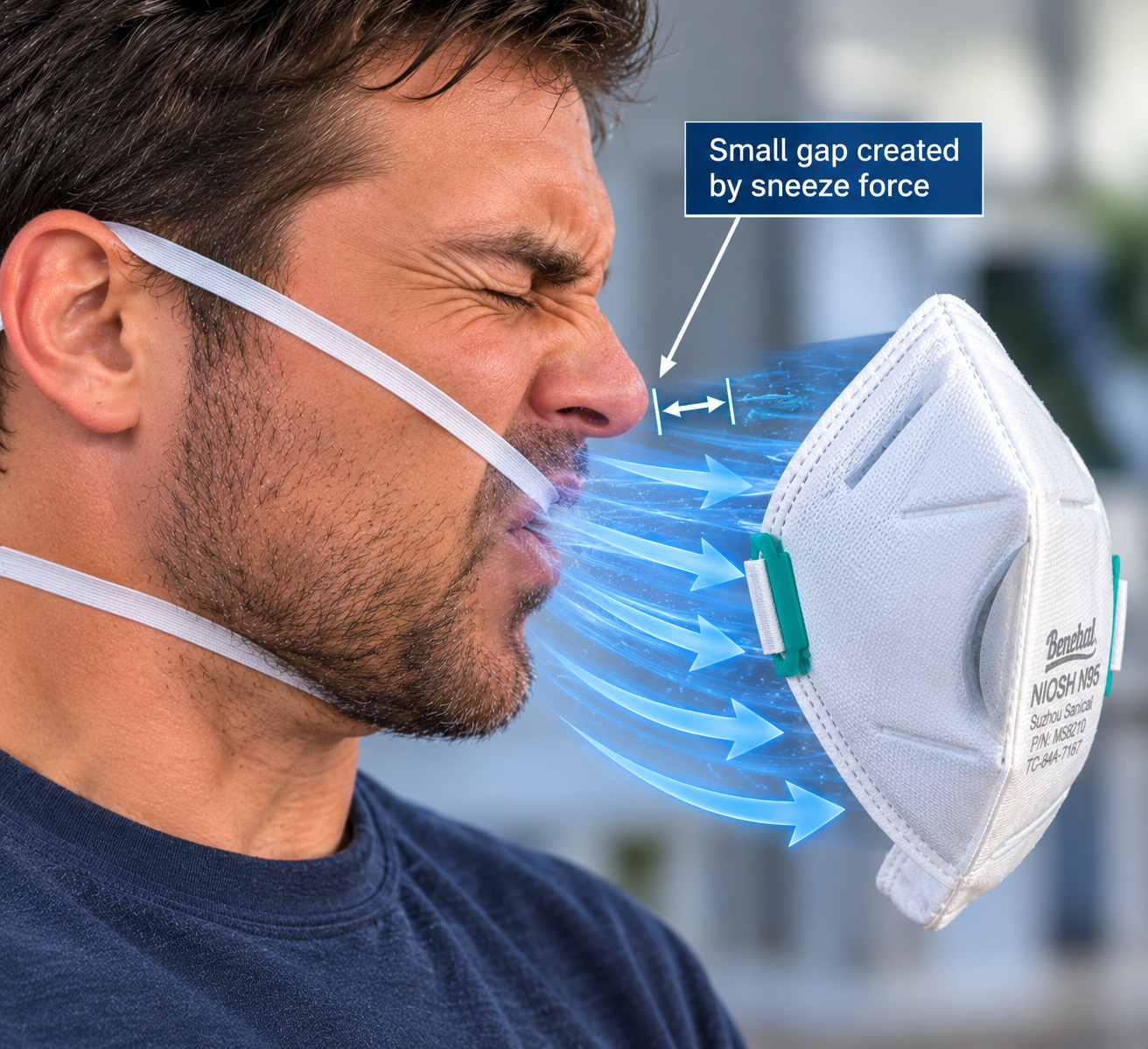
Mask Sneezing
Compare sneezing in your N95 mask to the Super Mask by SAMGO1 LLC
Sneezing in a standard N95 mask creates an immediate, high-pressure moisture spike that can overload static filter fibers and cause temporary leakage around fixed edges. Sneezing inside the Super Mask by SAMGO1 LLC interacts with a dynamic, floating filter assembly that moves outward with the blast.
Moisture and Pressure Handling
- Standard N95: Traps wet droplets within a dense, static material, which increases internal air resistance and can degrade pre-charged electrostatic layers.
- Super Mask: The physical surge of a sneeze pushes against the movable "floating" filter. High humidity from the sneeze does not ruin the charge because the motion of breathing continuously regenerates electrostatic triboelectrification.
Airflow and Seal Response
- Standard N95: Forces high-pressure air uniformly through tight, unmoving pores, frequently lifting the perimeter seal off the face or facial hair.
- Super Mask: Uses an oscillating assembly and airflow principles to manage pressure shifts dynamically, which helps the seal stay intact during sudden exhalations like sneezes.
- Take off the mask: A wet N95 does not block air the right way anymore.
- Put on a new one: Do not wear a damp or sneezed-in N95 mask again.
- Get wet: Mucus and wet steam stick to the inner N95 layers.
- Loose seal: Wetness and high air pressure push the N95 mask edges away from your face
When sneezing, the Super Mask from SAMGO1 LLC ensures that the majority of sneezes will hit the medical-grade plastic mask and absorbent pad before it touches the N95 filter pad.
Yes, you can potentially infect others if you continue using an N95 mask after sneezing into it. While the CDC notes that respirators filter out droplets and particles, a heavily soiled or wet mask loses its structural integrity and filtration efficiency, increasing the risk of germ transmission.
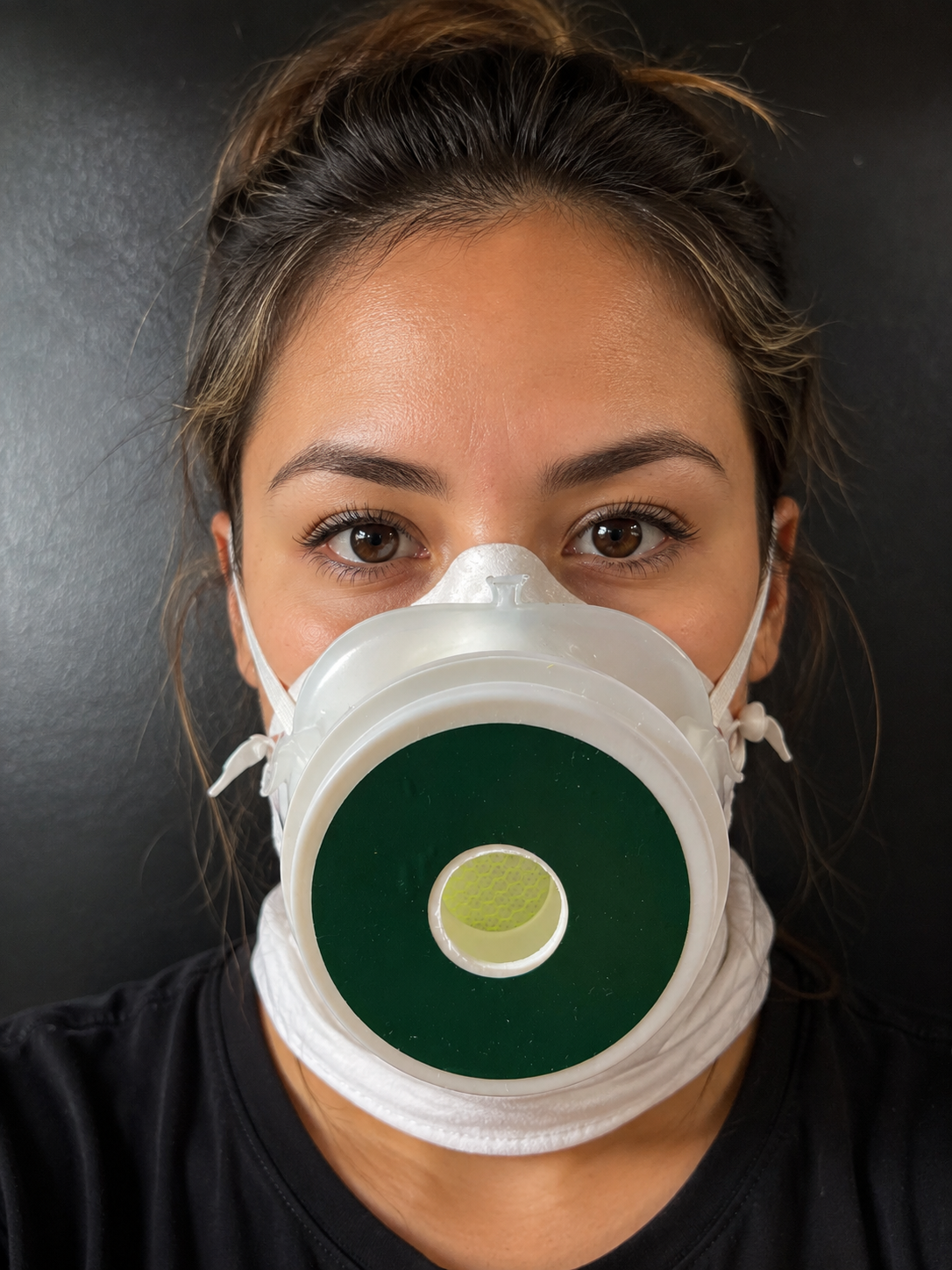
Mask Coughing
A single cough produces approximately 3,000 respiratory droplets, while a sneeze releases approximately 40,000, per a September 2020 review published in the American Journal of Respiratory and Critical Care Medicine.
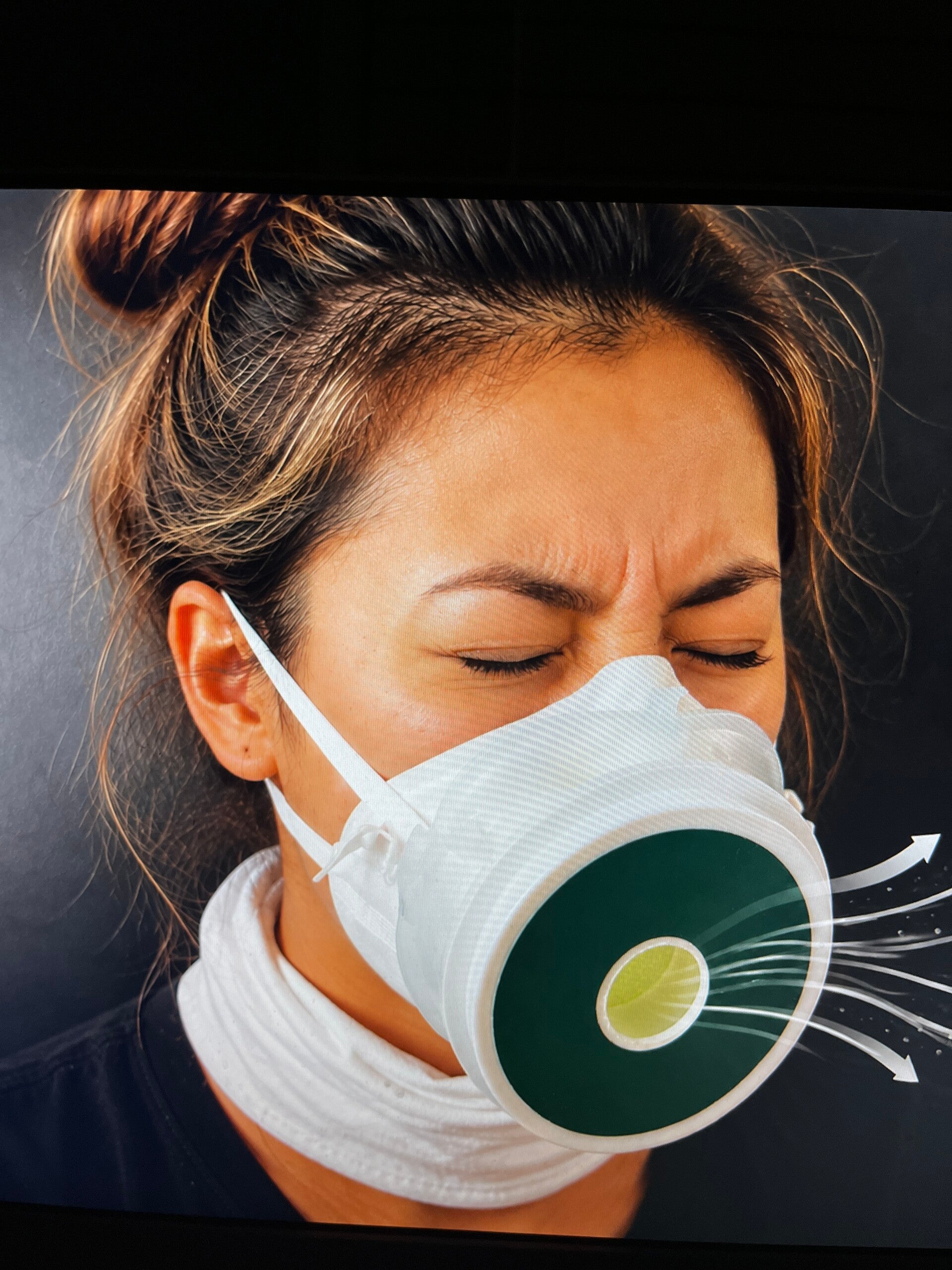
Coughing inside a standard N95 mask forces a high-pressure blast of moist air and droplets against a rigid, stationary static filter that can degrade from moisture, whereas coughing into the Super Mask from SAMGO1 LLC hits a dynamic, floating oscillating filter that uses the sudden pressure spike to flex and continuously self-charge via triboelectrification.
Containment and Pressure
- N95 Mask: A cough creates a high-pressure surge inside the sealed cup, forcing air out through the dense mechanical/electrostatic material and any minor face-seal gaps.
- Super Mask: The forceful exhalation of a cough pushes against the inner floating filter assembly, causing it to displace forward while utilizing the internal airflow dynamics and a 1-inch front opening structure to manage the pressure drop.
Moisture and Filtration
- N95 Mask: Heavy moisture and saturation from a direct cough can dampen the pre-charged static fibers, temporarily lowering filtration performance in high-humidity or wet conditions.
- Super Mask: The mechanical movement and friction of the filter shifting during heavy exhalations or coughs continuously regenerate the electrostatic charge (triboelectrification), helping maintain baseline particle capture efficiency even when exposed to moisture.

A surgical or N95 mask can become ineffective immediately after a single heavy cough or sneeze if it becomes visibly damp, soiled, or dislodged from your face. While dry masks can maintain filtration for up to 4 to 8 hours under normal breathing conditions, the concentrated burst of moisture and pressure from a cough or sneeze dramatically accelerates their degradation. (National Institutes of Health) (NIH).
The structural and physical effects of coughing or sneezing into each type of mask outline how their effectiveness changes.
Surgical Masks
- Immediate Moisture Impact: Surgical masks rely on a middle layer of electrostatically charged melt-blown plastic to trap microscopic particles. A single heavy sneeze or wet cough can instantly saturate this layer. When wet, the electrostatic charge is neutralized, drastically reducing its filtration capabilities.
- Fit Disruption: Surgical masks already have a loose fit. The forceful air blast from a sneeze will bypass the filter entirely, pushing infectious droplets out through the wide gaps on the sides, top, and bottom of the mask.
- Action Step: If you cough or sneeze heavily into a surgical mask, it should be discarded and replaced immediately.
N95 Respirators
- Resilience to Mild Moisture: N95 respirators are built with thicker, more robust layers that can tolerate normal respiratory condensation and light humidity without losing significant efficacy right away.
- The "Sneeze Blowout" Risk: The biggest threat to an N95 during a cough or sneeze is the physical pressure. The sudden blast of air can easily break the tight facial seal required for the respirator to work. If the mask shifts or breaks its seal, unfiltered air will leak in and out around the edges.
- Saturating the Material: If a heavy cough or sneeze leaves a noticeable wet spot or mucus on the inside of the N95, the breathability decreases, forcing more air to bypass the filter material through the edges. (National Institutes of Health) (NIH).
Standard surgical and N95 masks can lose structural integrity, fit, or static charge when heavily dampened by a severe cough or sneeze. In contrast, the Super Mask from SAMGO1 LLC uses a dynamic, self-charging oscillating filter designed to retain electrostatic performance in humid or moisture-heavy conditions.
Traditional Masks vs. Super Mask
- Standard Surgical/N95 Masks:
- Rely on static electret charges that can degrade or short-circuit when exposed to heavy moisture, high humidity, or direct saturation from fluids.
- Loose surgical fits or stretched N95 seals fail to protect once dislodged.
- Intended for single use and recommended for disposal if visibly soiled or wet.
- SAMGO1 LLC Super Mask:
- Features a mechanical Oscillating Filter Assembly where breathing movement creates continuous triboelectric self-charging.
- Designed to maintain filtration efficiency in humid environments better than static-decay-prone traditional filters.
- Utilizes replaceable filter pads within a reusable structural frame.